
A second kind of reading · The Secret of the Old Clock (1930)
A clue to a clue
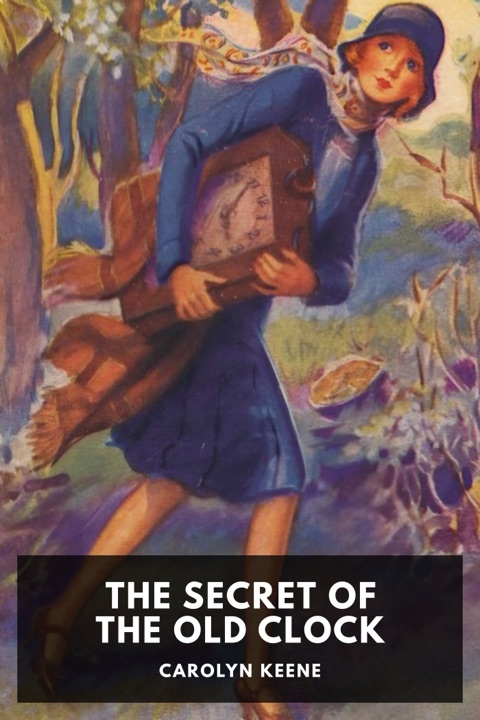
The Odyssey asked which reading to keep. A mystery asks something narrower and just as demanding: what does this sentence let you infer, and what does it not? Here the evidence runs in a chain, and the most tempting inference is one the book itself refuses.
A prepared example, not a live AI response. Quotations are exact, from the Standard Ebooks edition of the 1930 text (not the 1959 revision). Public domain in the United States; rights elsewhere are not inferred. The ending is behind two clearly marked spoiler gates.
1. Testimony
Josiah Crowley has died, and a will that favours the Tophams is the only one known. A lawyer remembers a visit.
About a year ago Crowley came to my office and told me that he wanted to draw up a new will. … He expressed a desire to write the will himself …
I don’t see how you hope to discover what became of the will when you haven’t even a clue.
This establishes an intention, not an object. Crowley meant to write a new will himself; whether he did is still open, and Nancy's father says so.
2. A promise about a place
‘I guess they’ll be fooled all right when they find out I’ve made another will,’ he said with that odd little chuckle of his. ‘This time I’m not going to trust it to any lawyer. I’ll put it away in a place that I know will be safe.’
Now there is a claim about location, reported at second hand. It names a kind of place, not a place.
3. A memory, cued
At that very moment the clock on the mantel chimed three. …
For an instant she stared straight before her and then slowly turned her head and fastened her eyes on the clock.
“The clock,” Abigail whispered so softly that the words were scarcely audible. “That was it! The clock!”
“Josiah Crowley hid the will in a clock?” Nancy prompted her.
“No,” Abigail shook her head and sighed again. “That wasn’t it. I thought I had it, and then it slipped my mind. I seem to recollect that he said something about a clock, but that wasn’t it.”
(passage omitted)
“A notebook!” Abigail brought out triumphantly. “It was something about a notebook!”
(passage omitted)
“I remember it all now. Josiah wrote about the will in a little notebook of his. One day he said to me: ‘Abigail, after I’m dead if my will doesn’t come to light, you can find out all about it in this little book of mine.’ ”
The clock works here as a cue, not a container. Abigail rejects the obvious inference herself. What the chime recovers is a record: a notebook that tells about the will.
What can you infer at this point?
The will is hidden in the clock.
The text has already tested this. Asked directly, Abigail answers “No.” The clock prompted her memory; it did not become the hiding place.
Find the notebook; it will say where the will is.
This follows most closely from what Abigail says: the notebook tells “all about it.” Where the notebook is, she cannot yet recall. Any answer to that is still an inference.
Nothing yet: an old memory, prompted by a chime, may be wrong.
A fair caution. The novel takes it seriously too: later, Nancy notices that one step of her own plan rested on her deduction rather than on anything Abigail said. See the first spoiler gate below.
Spoiler, chapter XX: how Nancy tests her deduction
It was more likely that Abigail Rowen had been confused in her story. After all, she had not declared that the notebook would be found inside the clock. Nancy had made the deduction herself.
There, at one side of the clock, attached to a hook in the top, dangled a tiny blue notebook!
The book marks the difference between testimony and inference. The notebook in the clock was Nancy's deduction, and the text says so before it proves her right.
Spoiler, chapter XXII: where the chain ends (reveals the ending)
“To whom it may concern: My last will and testament will be found in safety deposit box number 148 in the Masonville National Bank. The box is under the name of Josiah Harkston.”
The chain runs from testimony, to a place called safe, to a memory cued by a chime, to a record, to an address. The clock was never the answer; it was the way to one.
Beside the Odyssey
In the Odyssey, readings can overlap and the text leaves the choice with you. Here one account is finally confirmed, but only after the book has shown which step was evidence and which was a guess. Both are ways of thinking with a book. Library Twin is being built for both: interpretation that stays open, and inference that shows its steps.